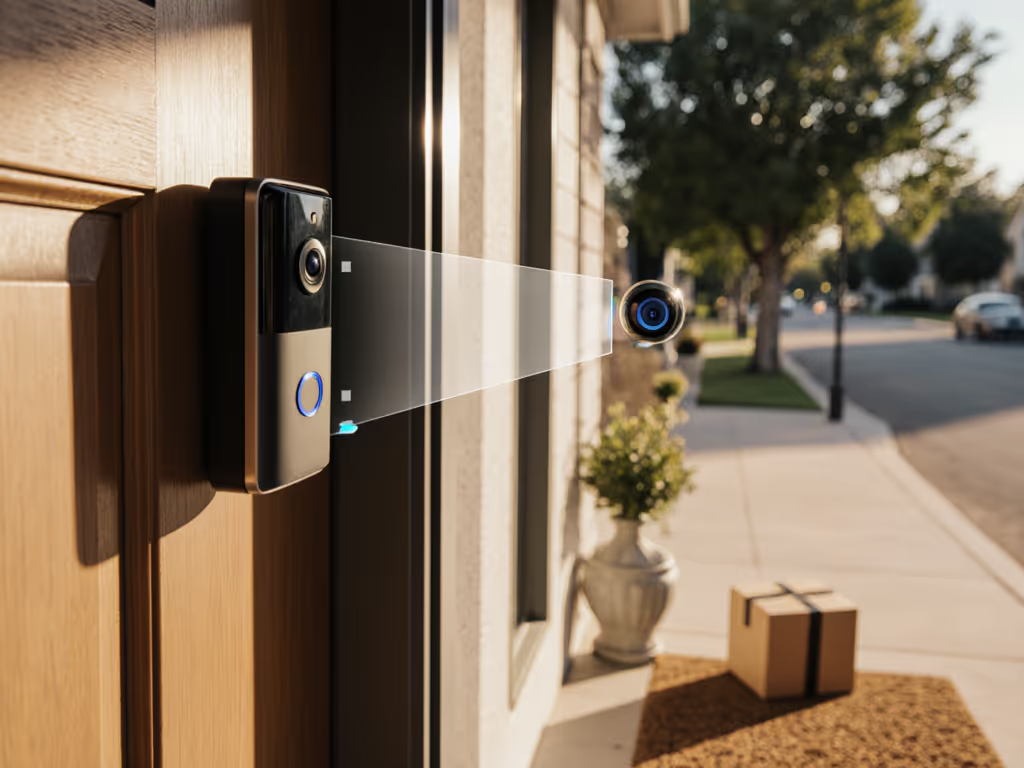
Best Video Doorbells for First-Time Homeowners
By Diego Sato • 19th Mar
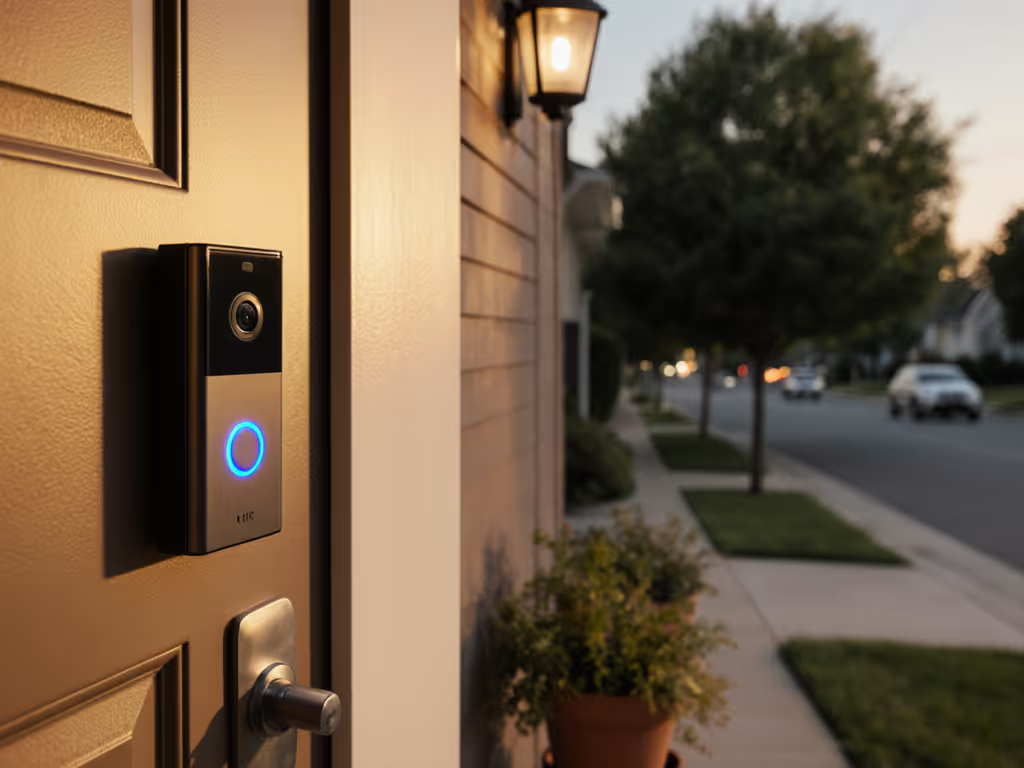
When you're setting up entry-level security system basics for a home, the camera video doorbell is your front-line defense, and it's the first piece most new owners get right if they focus on false-alert reduction and honest total cost. First-time buyers often underestimate how much noise a doorbell creates: motion floods from passing cars, sidewalk traffic, and shadows can turn even a solid device into an alert fatigue machine rather than a security tool. The key difference between cameras that disappear into your workflow and those that become a maintenance headache is how well they triage what matters: people and packages, not every passing vehicle.
This guide cuts through the hype and focuses on value-focused doorbell options backed by real-world testing data, transparent pricing, and an honest assessment of where budget picks fall short. I've emphasized setup durability, false-alert filtering, and honest battery and cloud costs (the metrics that matter when you're managing a household workflow, not a surveillance center).
Understanding Your Real Costs
Before comparing hardware, accept that sticker price is only half the story. A $49 doorbell that demands a $120 annual cloud subscription looks different when you tally 36 months ahead. First-time homeowners routinely discover surprise fees: chimes, adapters, storage tiers, and professional installation charges that weren't obvious in the initial search.
Wired doorbells require low-voltage wiring compatibility; battery models drain faster in cold climates or high-traffic areas with constant motion detection. Cloud storage is rarely optional, since most devices shed local recordings quickly. And if you have roommates or family members who need package alerts, you'll need multi-user access and a system that lets you audit who saw what and when. Document the handoff path from the start, or you'll lose track of deliveries during handoffs between household members or shifts.
The Top Video Doorbell Picks for First-Time Owners
1. SimpliSafe Doorbell (Best Intruder Prevention and False Alert Control)
SimpliSafe earns the top analytics-driven pick for first-time homeowners because it combines a feature-packed budget option (1080p, 162-degree field of view) with Active Guard, a feature that lets monitoring agents intervene through the speaker to deter intruders before theft happens. The 162-degree field of view is the widest in this tier, capturing nearly your entire stoop and curb zone, and it scales down false alerts by letting you adjust detection sensitivity and create activity zones that ignore sidewalk foot traffic. If your entry needs maximum coverage for deliveries, compare 180° doorbell cameras tested for package theft prevention.
The trade-off is power: SimpliSafe requires hardwired installation, which complicates setup for renters but ensures reliable, battery-free operation. If you own and have existing doorbell wiring, this is a negligible barrier. Setup cost runs $169 for the doorbell alone, but the real value emerges if you add their Pro monitoring plan ($49.99/month) for two-way intervention and faster emergency dispatch. Without the plan, it's still a solid local-recording option at lower cost.
Operational uptime matters more than showroom specs for shops, and SimpliSafe delivers consistency because it's not cloud dependent for basic motion recording or chime alerts.
Key metrics:
- Equipment cost: $169.00
- Monthly monitoring (optional): $49.99
- 1080p full-HD resolution
- 162° field of view (widest in this tier)
- Hardwired, no battery anxiety
- Activity zones to filter false alerts
- Two-way audio and cloud backup
2. Eufy Video Doorbell S330 (Best for Package Detection and Multi-Camera Coverage)
Eufy's wired S330 stands out because it uses two cameras: one facing outward to capture visitor faces and one pointed downward to catch package placement details. This dual-lens approach is rare at this price tier and solves a real pain point: you see not just that a package arrived, but where it was left and whether it was tampered with post-delivery.
The S330 includes 8 GB of local storage (no subscription required for basic operation), high dynamic range (HDR) for better backlit-doorway clarity, and 3-second pre-roll clips that show approach motion before the main event. Facial recognition, person detection, and package detection round out the smart-alert toolbox. Integration with Alexa and Google Home is seamless, and activity zones let you silence motion from the sidewalk or porch swing.
Wired installation requires low-voltage doorbell wiring, but the payoff is zero battery recharging and deterministic power reliability. For a household receiving frequent deliveries or with multi-user access needs, the dual-camera design and local storage become a real operational advantage.
Key metrics:
- Dual-camera design (outward + downward)
- 8 GB onboard storage; optional cloud plans
- 1080p resolution; HDR for backlighting
- Pre-roll video (3 seconds before detection)
- Person, package, and pet detection
- Activity zones and 24/7 recording option
- Works with Alexa and Google Home
- Wired installation
3. Google Nest Doorbell Wired (3rd Gen) (Best for Intelligent Alerts and Context)
Google Nest earns recognition for its alert sophistication. Instead of generic "motion detected" notifications, Nest provides contextual intelligence: it alerts you when a person arrives, differentiates a package from a passerby, and even learns familiar faces (family, regular delivery drivers). During real-world testing, testers reported that Nest notified them of package arrivals and coordinated nearby-neighbor pickups seamlessly, exactly the kind of handoff clarity that prevents lost mail and reduces household friction.
The Nest Doorbell Wired (3rd Gen) is wired only, eliminating battery replacement cycles entirely. It delivers 960x1280 resolution and a 145-degree field of view. To unlock full potential (cloud storage, sound-based alerts, familiar-face detection), you'll need a Google Home Premium subscription ($10/month). This is a transparent, low-friction cost, and the per month charge is far lower than rival cloud plans.
One significant limitation: Nest lacks professional monitoring, so it's a passive alerting device, not an active-intervention tool like SimpliSafe's monitoring agents. For renters and apartment dwellers who can't run low-voltage wiring, Google Nest offers a battery-powered variant; however, the wired version is more reliable for multi-user household workflows.
Key metrics:
- 960x1280 resolution; 145° field of view
- Wired installation (no battery)
- Intelligent alerts (person, package, familiar face recognition)
- Google Home Premium: $10/month for full features
- Two-way audio with low latency
- Works with Alexa and Google Home
- No professional monitoring option
4. Aqara Smart Video Doorbell G4 (Best Subscription-Free Smart Alerts)
For first-time homeowners who want to avoid monthly subscriptions entirely, Aqara G4 is a standout performer. Consumer Reports testing found it scored excellent marks for response time (fast alerts and live-view loading) and strong marks for smart features despite lacking a subscription requirement. Person detection, facial recognition, and activity zones are included at no recurring cost.
The trade-off is that Aqara's ecosystem is smaller than Google or Amazon's, and it leans toward Apple HomeKit and local Home Assistant integration rather than universal cloud platforms. If you're already in the HomeKit or Home Assistant world, this is seamless; if not, compatibility questions may surface.
Aqara does offer optional cloud and local storage plans (via Apple or Aqara) if you want off-site backups, but the core device operates without them. This aligns with privacy-conscious first-time buyers who prefer local control and explicit opt in for cloud storage rather than mandatory subscriptions.
Key metrics:
- No mandatory monthly subscription
- Person and face detection
- Activity zones and smart alerts
- Apple HomeKit and Home Assistant compatible
- Optional cloud/local storage plans
- Good response time and alert speed
- Lower ecosystem compatibility than Google/Amazon
5. Eufy Video Doorbell C31 (Best Budget Battery Option for Renters)
Eufy's C31 is an inexpensive battery-powered entry-level security system starting point, delivering 2K resolution (2560×1440), solid video quality, and above-par response times for alert speed. Battery life in normal conditions is reasonable, though winter performance (and recharge intervals in high-motion areas) should be measured before committing to a rental unit.
The C31 excels as a renter-friendly option because it's wireless and requires no wiring, so you can install it on the doorframe with included adhesive or a small magnetic bracket. It works with Alexa and Google Home and includes the basic motion-detection smart features that block obvious false alerts from trees and shadows.
Data security scores well in testing, though data privacy is middling, typical for budget models. There's no professional monitoring and no advanced features (package detection, familiar-face detection), but for a household's first doorbell, it covers the essentials without a hefty price tag or subscription.
Key metrics:
- 2K resolution (2560×1440)
- Battery powered; no wiring required
- Renter-friendly installation
- Alexa and Google Home compatible
- Good response times and video quality
- Basic motion detection; no package/face detection
- No mandatory subscription
- Cold-climate battery drain: monitor in winter
6. Lorex 2K QHD B451AJD-E (Best for Color Night Vision and Activity Zones)
Lorex's 2K doorbell earned strong ratings in Consumer Reports testing for video quality and security, with particular strength in color night vision (rather than infrared grayscale). The 2K resolution offers clearer detail than 1080p, and activity zones let you fence out motion from sidewalks and busy streets, which is critical for reducing false alerts on urban stoops or near traffic.
Person detection is built in, and voice/app control via Alexa and Google Home are included. Like Aqara, Lorex does not require a subscription, making it attractive for privacy-conscious households that prefer avoiding recurring fees. Wired or wireless variants exist, so renters can choose battery, and homeowners can opt for hardwired reliability.
One caveat: Lorex's ecosystem is smaller than Ring or Google, so if you're building a full smart-home strategy, compatibility questions may arise. For a first-time doorbell focused solely on good video quality alerts without subscription friction, Lorex is a pragmatic choice.
Key metrics:
- 2K QHD resolution; superior detail
- Color night vision (not IR only)
- Activity zones and person detection
- No mandatory subscription
- Alexa and Google Home support
- Strong video quality scores in testing
- Wired and wireless options available
7. Ring Doorbell Wired Pro (3rd Gen) (Best for Variety and Ecosystem)
Ring remains the broadest platform option, offering battery, wired, and PoE variants, with starting prices as low as $49.99. The 3rd Gen Wired Pro is their premium doorbell option and can be integrated into the broader Ring ecosystem (outdoor cameras, alarm systems, chimes) if you expand later.
Ring requires a subscription plan ($4.99 to $19.99 per month depending on features) for cloud recording, person detection, and package detection, but basic motion alerts and live view work without a paid plan. This is transparent: you know upfront what the free tier and paid tiers include.
For first-time homeowners, Ring's appeal is ecosystem optionality, since you're not locked into a single platform and can add outdoor cameras, floodlight cameras, or chimes without compatibility friction. The downside is that moving away from Ring later requires switching the entire ecosystem.
Key metrics:
- Starting at $49.99 (battery variant)
- Wired Pro up to 1536p resolution; 160° FOV
- Subscription tiers: $4.99 to $19.99 per month for advanced features
- Broad ecosystem (cameras, chimes, alarm integration)
- Battery, wired, and PoE options
- Two-way audio and package detection (with subscription)
- Largest third-party accessory market
Key Comparison: What Matters Most for First-Time Owners
| Feature | SimpliSafe | Eufy S330 | Google Nest | Aqara G4 | Eufy C31 | Lorex 2K | Ring Wired Pro |
|---|---|---|---|---|---|---|---|
| Resolution | 1080p | 1080p | 960x1280 | Varies | 2K | 2K | Up to 1536p |
| Field of View | 162° | Dual lens | 145° | Varies | Wide | Wide | 160° |
| Power | Wired | Wired | Wired | Battery | Battery | Battery/Wired | Battery/Wired |
| No Subscription Option | No (Pro plan) | Yes (8 GB local) | No (Premium $10/mo) | Yes | Yes | Yes | No (from $4.99/mo) |
| Person Detection | Yes | Yes | Yes | Yes | Basic | Yes | Yes (with sub) |
| Package Detection | Yes | Dual cameras | Yes | No | No | No | Yes (with sub) |
| Activity Zones | Yes | Yes | Yes | Yes | Basic | Yes | Yes |
| Two-Way Audio | Yes | Yes | Yes | Yes | Yes | Yes | Yes |
| Professional Monitoring | Yes ($49.99/mo) | No | No | No | No | No | No |
| Best For | Intruder prevention; wired homes | Package detail; multi-camera | Smart alert context | Privacy; HomeKit | Renters; budget | Color night vision | Ecosystem flexibility |
Installation and Hidden Costs: What First-Time Owners Overlook
Wired doorbells demand transformer compatibility and low-voltage wiring inspection. Many older homes have mechanical chimes that require diodes to avoid buzzing or false triggering. For step-by-step help preserving your existing chime, see our chime wiring and transformer compatibility guide. Budget $50 to $150 for a ring chime adapter or smart chime if your existing setup is incompatible. First-time homeowners often discover this mid install.
Battery doorbells sidestep wiring but introduce recharge friction. In cold climates, battery drain accelerates in winter; expect recharging every 2 to 4 months rather than the optimistic "3 to 6 months" on the box. If you live where outdoor temperatures drop below freezing regularly, lean toward wired.
Cloud storage costs vary dramatically. SimpliSafe's Pro plan ($49.99/month) includes 24/7 monitoring and recording; Google Home Premium ($10/month) covers cloud storage and smart features; Ring's base plan ($4.99/month) covers cloud video only. Over 36 months, subscription choice adds $180 to $1,800 to total cost of ownership. Get a clear breakdown of cloud vs local storage trade-offs to avoid surprise fees.
Multi-user access is often free but sometimes behind paywalls. Verify that household members can share access without per-user fees.
What False-Alert Control Actually Requires
Many first-time buyers assume motion detection is motion detection. It's not. A doorbell that alerts on every passing car, dog, and shadow is broken, not secure. The ones that matter implement activity zones (ignore the sidewalk, trigger only on the porch) and object classification (distinguish people from vehicles or trees). SimpliSafe, Eufy S330, and Lorex excel at this because they allow zone customization in their apps. Learn how modern video analytics cut false alarms before you commit to a model.
I've seen a shop on my block lose track of deliveries because motion floods from buses kept triggering the chime nonstop. The fix wasn't a better camera, it was a narrow field-of-view doorbell paired with zoned motion detection and a simple on-premises recorder. Package captures went up, false alerts dropped by 90%, and the shift manager finally got silence back. That's the operational win: security gear that lightens your workload, not adds a new job.
Summary and Final Verdict
For a first-time homeowner security setup, prioritize three factors in order: false-alert filtering (activity zones and object detection), transparent total cost (device + accessories + 3-year subscription), and reliability across your climate and Wi-Fi zone.
If you own your home and have existing doorbell wiring, SimpliSafe Doorbell is the top recommendation: wide field of view, powerful false-alert filtering, optional professional monitoring, and no battery anxiety. The hardwired design means uptime and predictable costs.
If you receive frequent deliveries and want to see package placement details, the Eufy Video Doorbell S330 dual-camera design and 8 GB local storage deliver clarity without mandatory cloud subscriptions, and multi-user household access is straightforward.
If you're a renter or want ecosystem flexibility and acceptable performance without wiring, Google Nest offers intelligent alerts and low-cost cloud ($10/month) with fast notification speeds. The wired variant avoids battery recharge friction if you can run low-voltage wiring.
If you want to avoid subscriptions entirely and value privacy, Aqara G4 (with HomeKit or Home Assistant) or Lorex 2K (color night vision, activity zones) are solid picks, with the caveat that ecosystem breadth is narrower.
For the most budget-conscious renter, Eufy Video Doorbell C31 handles core needs (2K, motion alerts, Alexa/Google) without subscriptions or wiring.
Skip the shopping-cart temptation to buy the cheapest option or the most feature rich; instead, match the camera to your specific pain point (packages, intruders, false alerts, multi-user coordination). The best entry-level security system doorbell is the one you'll actually use, not the one collecting dust because it's too noisy or too expensive to keep running. Test activity zones and false-alert filtering before committing. That's where the real security lives.
Related Articles