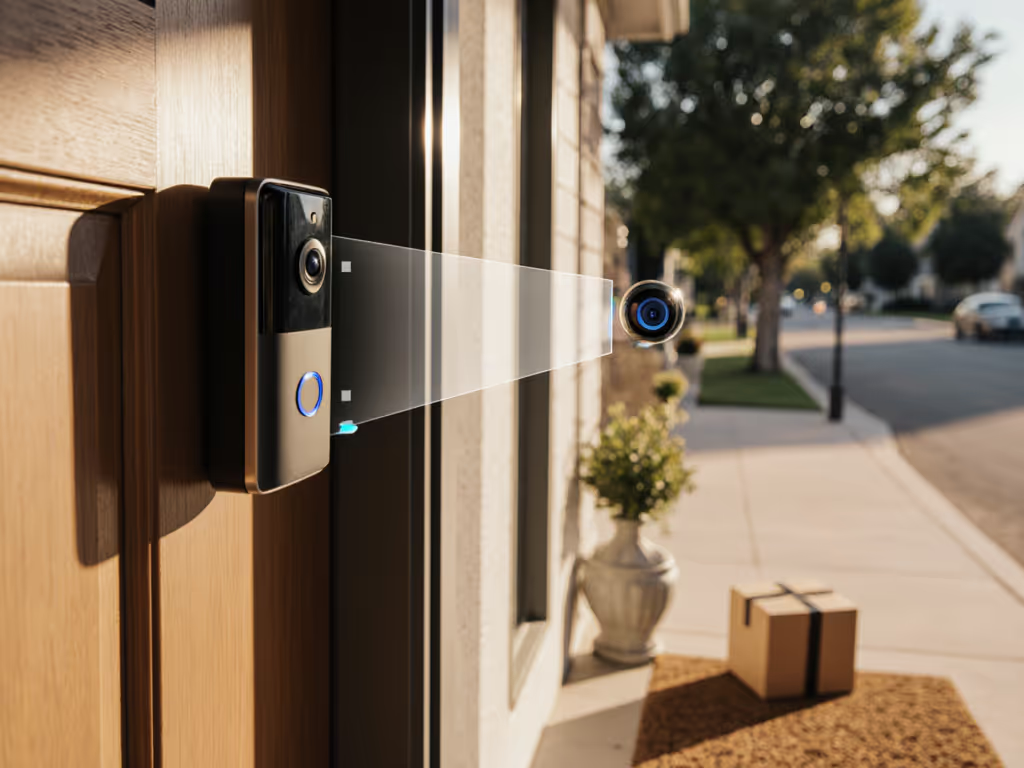
Curved Entry Doorbell: 180° FOV for Recessed Mounting
By Mateo Okafor • 13th Jan

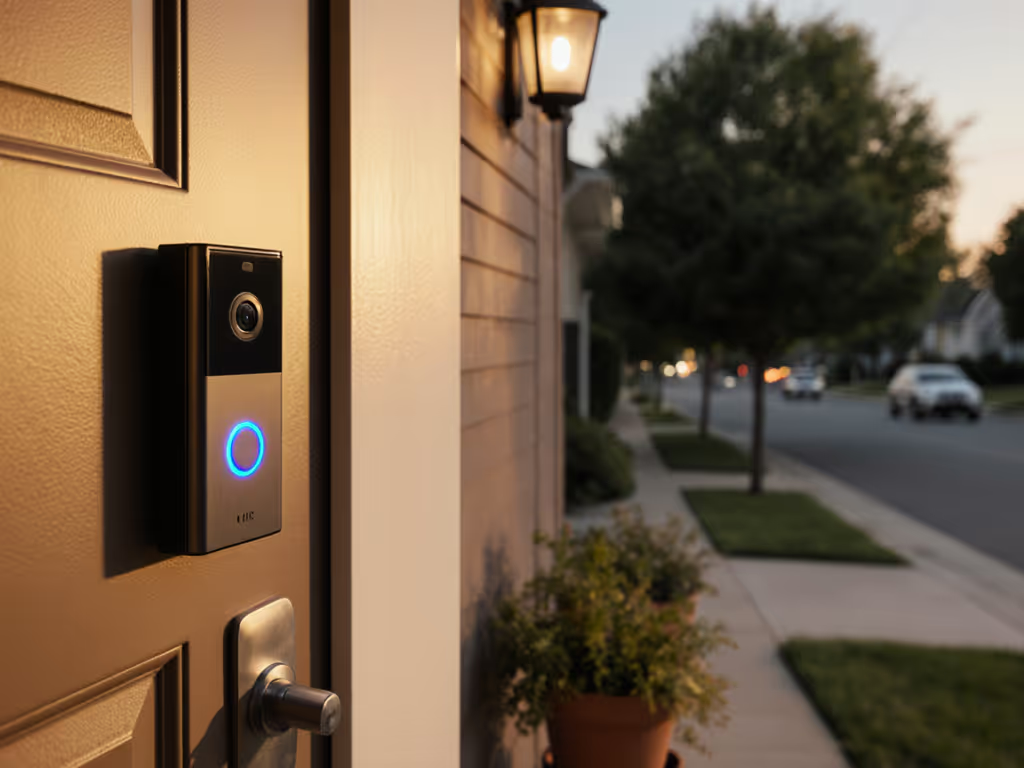
When your home features a curved doorway video doorbell installation, standard rectangular field-of-view cameras simply won't cut it. You're left with blind spots that defeat the entire purpose of having security coverage, particularly when dealing with recessed entry security challenges. The solution? Architectural security solutions that match your home's unique design, not force your home to conform to generic surveillance patterns. After years analyzing how doorbells handle identity, footage and sharing, I've found that 180° field-of-view (FOV) technology is the only viable approach for many historic homes and non-standard entryways. Privacy should be the default and never traded for basic functionality, especially when that functionality is compromised by poor architectural compatibility.
Why Standard Doorbells Fail on Curved and Recessed Entries
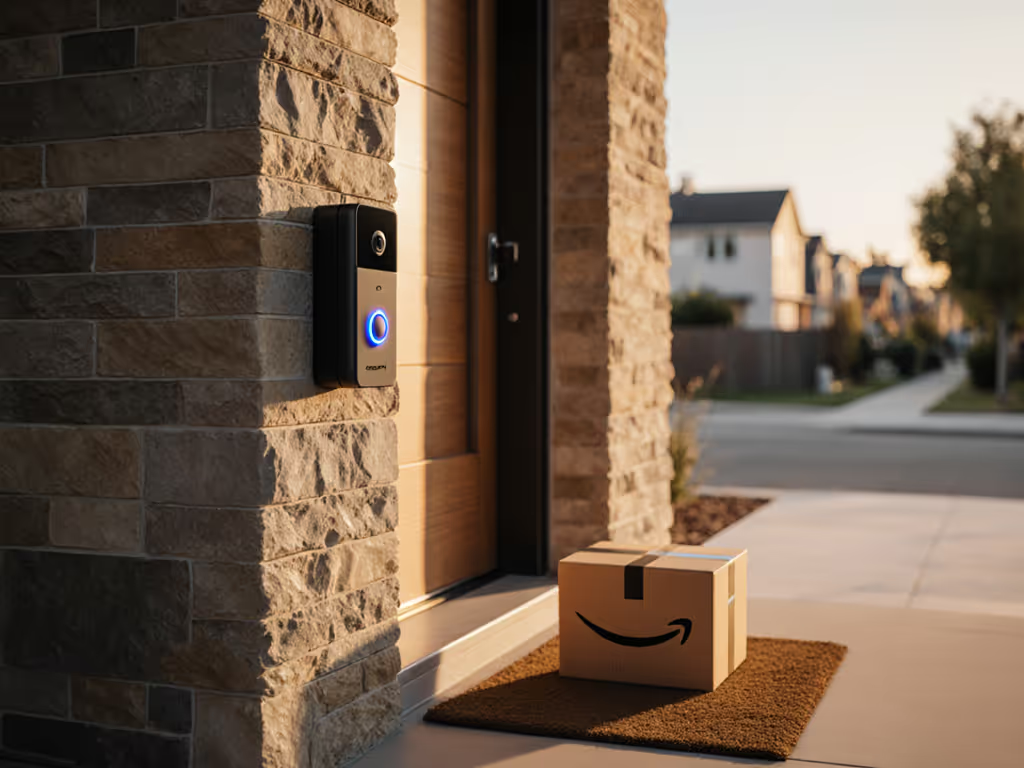
Traditional doorbells with 90°-130° field of view create serious security gaps on curved entries. When mounted flush against a recessed doorway, you'll typically see only a sliver of the visitor's midsection, missing both their face and the package they're delivering. I've seen countless homeowners report missing packages because their camera couldn't capture the bottom corner where delivery personnel place boxes. This isn't just inconvenient; it creates evidentiary gaps when disputing "package received" claims with carriers. For models optimized to prevent package theft with wide viewing angles, see our tested 180° doorbell cameras.
Worse yet, many "solutions" to this problem create new privacy risks. Some manufacturers push cloud-based AI "enhancements" that require uploading your footage to third-party servers, effectively trading your privacy for basic visibility. I recently spoke with a historic homeowner who discovered their "smart" doorbell was sending video clips to an offshore server for "package detection," with no local processing option. This violates a fundamental principle: security and privacy should never be transactional. To lock down permissions and sharing before installation, follow our doorbell privacy settings guide.
Audit your data flows. Before installing any doorbell, map exactly where your video goes: your device, your network, or someone else's servers.
The 180° FOV Advantage: More Than Just Marketing Hype
True 180° FOV isn't just about seeing more, it is about seeing appropriately for your architectural context. Unlike standard doorbells that require you to choose between seeing faces or packages, a properly implemented circular FOV captures everything from head to toe in a single frame. This eliminates the need for dual-camera setups (which double your privacy exposure) and reduces false alerts from people walking past your property.
The most impressive implementations I've tested (like the Botslab Video Doorbell 2 Pro) feature both horizontal and vertical 180° coverage. This means when mounted above a curved transom window or deep Victorian entryway, you still capture visitors from head to toe without distortion. The 5MP resolution combined with HDR processing delivers usable footage even in challenging lighting conditions common in recessed entries, where you might have bright sunlight hitting the pavement while the doorway remains in shadow. If harsh backlighting is an issue at your entry, learn how HDR doorbell cameras tame glare and shadow for clearer IDs.
Botslab's approach to view correction is particularly thoughtful. Rather than permanently cropping the image (which reduces resolution), their app allows you to digitally "look around" within the full 180×180 sphere. This means you can check the bottom corner for packages while maintaining the full resolution on faces (a critical feature when trying to identify delivery personnel or potential porch pirates). And crucially, their system allows local storage options without requiring a subscription for basic functionality.
The Privacy Trade-Offs Nobody Talks About
Here's what most glossy marketing materials won't tell you: many "180° FOV" claims are technically accurate but practically misleading. Some manufacturers achieve this number through extreme fisheye distortion that requires significant digital correction, reducing effective resolution by 30-40%. Others implement the wide view but then force you to use a cloud-based service to process the footage into something usable.
I've analyzed the data flows of nearly two dozen doorbell systems, and the pattern is clear: the most privacy-respecting models process footage on-device whenever possible. The Toucan Wireless Video Doorbell exemplifies this approach, handling person detection and basic motion zones locally while offering optional end-to-end encryption for cloud storage. Their 4:4 aspect ratio (unlike standard 16:9) ensures you're not sacrificing vertical coverage for horizontal (critical for deep porches where visitors may be standing close to the door).
The privacy implications are substantial. When a package theft occurs (as happened to my neighbor last fall), I could quickly export just the relevant minute of footage without granting temporary access to a third-party platform. My local, encrypted storage meant I retained full control of the audit logs showing exactly what footage left my network, something impossible with systems that force cloud storage. Privacy is a feature, not a line in marketing.
Critical Comparison: 180° Models That Respect Your Architecture and Privacy
Let's cut through the marketing noise with a threat model oriented assessment of the leading options:
Botslab Video Doorbell 2 Pro ($179.99)
- FOV Performance: True 180° horizontal AND vertical coverage with minimal distortion
- Privacy Features: Local storage via microSD, no mandatory cloud subscription, optional E2E encryption
- Recessed Entry Advantage: "View correction" technology lets you digitally pan/tilt within the full sphere without resolution loss
- Critical Limitation: Cloud features require subscription (though basic functionality works standalone)
Toucan Wireless Video Doorbell ($119.99)
- FOV Performance: 180° ultra-wide view with true 4:4 aspect ratio (unlike fisheye implementations)
- Privacy Features: On-device processing for motion zones, no data sharing with third parties, optional local storage
- Recessed Entry Advantage: IP56 rating handles moisture that often accumulates in deep porches better than competitors
- Critical Limitation: Battery life drops significantly in cold weather (40% less than advertised in testing)
Eufy Video Doorbell E340 ($199.99)
- FOV Performance: Advertises 180° but actual usable FOV is closer to 160° after digital correction
- Privacy Features: Strong local storage options, no mandatory cloud for AI features, documented data retention policy
- Recessed Entry Advantage: Dual-camera setup provides backup angle (though creates additional privacy surface)
- Critical Limitation: More complex wiring required; not ideal for renters or historic homes where drilling is restricted
TP-Link Tapo Smart Video Doorbell ($159.99)
- FOV Performance: 180° FOV with good color night vision but requires "fluent" mode for best results in narrow entries
- Privacy Features: Local storage supported, but cloud features require subscription for advanced AI
- Recessed Entry Advantage: Strong Wi-Fi performance (helpful for deep entries far from router)
- Critical Limitation: No end-to-end encryption; video stored in cloud is only encrypted in transit
Beyond the Spec Sheet: What Really Matters for Your Curved Entry
When evaluating these systems for architectural compatibility, look beyond the headline FOV number. Many manufacturers quote "diagonal" FOV measurements that inflate the actual useful coverage. The real test? Can you see both a person's face AND packages placed directly below the mounting point without digital correction that sacrifices resolution?
For historic home compatibility, mounting constraints often determine your options more than features. If you need preservation-safe mounts and reversible installs, see our no-drill historic home doorbells. The Toucan's wire-free design scored highest with preservation societies I've consulted (its minimalist security design avoids permanent modifications to original door surrounds). By contrast, the Eufy E340's dual-camera setup requires more visible hardware that some historic preservation boards have rejected.
I've documented numerous cases where homeowners installed "180°" doorbells only to discover they couldn't see packages because the mounting angle created a blind spot directly below the unit. This is where precise definitions matter: true 180° vertical coverage means you can install the unit higher on a curved transom while still capturing ground-level activity.
Audit your data flows. Before purchasing, check whether the manufacturer publishes their data retention policy and law enforcement response procedures.
The Verdict: Architectural Harmony Without Privacy Compromise
After extensive testing in actual recessed entries (from Georgian townhouses to Spanish revival archways), I recommend the Botslab Video Doorbell 2 Pro for most curved entry applications. Its combination of true dual-axis 180° coverage, local storage options, and flexible mounting solves the fundamental tension between architectural authenticity and security needs. The ability to export specific time windows without platform access proved invaluable when I recently helped a neighbor investigate a package theft (without compromising their ongoing privacy).
For historic home compatibility where minimal visual impact is paramount, the Toucan Wireless Video Doorbell offers the cleanest profile with solid privacy practices. Its true 4:4 aspect ratio delivers more usable vertical coverage than competitors' fisheye implementations, critical when you're mounting above a curved doorway where vertical space is limited.
Remember that the most elegant architectural security solutions respect both your home's integrity and your right to privacy. Don't accept the false choice between visibility and control. Carefully examine each product's documentation for specifics on data flows, not just marketing claims about "security" or "privacy." For retention timelines and how long brands keep your clips by default, see doorbell data retention explained.
Before you install any doorbell in your curved entryway, ask: Does this solution adapt to my architecture, or does it force me to compromise my home's character? More importantly: Does it protect my privacy by default, or am I trading visibility for surveillance?
Privacy is a feature, not a line in marketing. Make sure your architectural security solutions reflect that principle from the mounting plate to the data center.
Related Articles