AI Sound Recognition Doorbell: Beyond False Alerts
By Mateo Okafor • 17th Dec
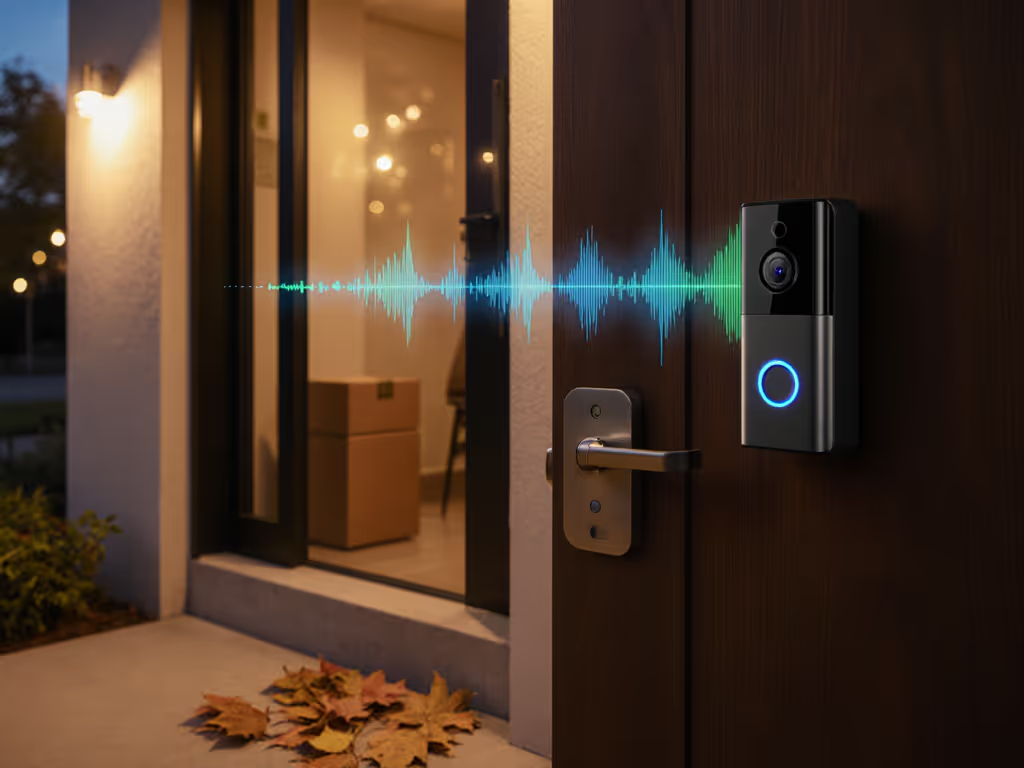
When evaluating modern security solutions, the emergence of AI sound recognition doorbell technology represents a paradigm shift in how we approach home surveillance. No longer limited to visual monitoring alone, sophisticated audio analytics systems now provide a critical layer of protection that addresses the fundamental limitations of motion-based detection. This technology changes the threat landscape by identifying specific auditory events before intrusions escalate, while also addressing the pervasive problem of false alerts that plague conventional systems. Let's explore how these advanced capabilities function, and what they mean for your security strategy.
How Does AI Sound Recognition Differ from Traditional Motion Detection?
Conventional doorbell cameras rely primarily on motion sensors and visual analytics, generating alerts for any movement within their field of view. This approach creates notification fatigue as users receive dozens of alerts daily for passing cars, swaying branches, or neighborhood pets. Doorbell sound detection systems, however, analyze specific acoustic signatures to determine whether an event warrants attention.
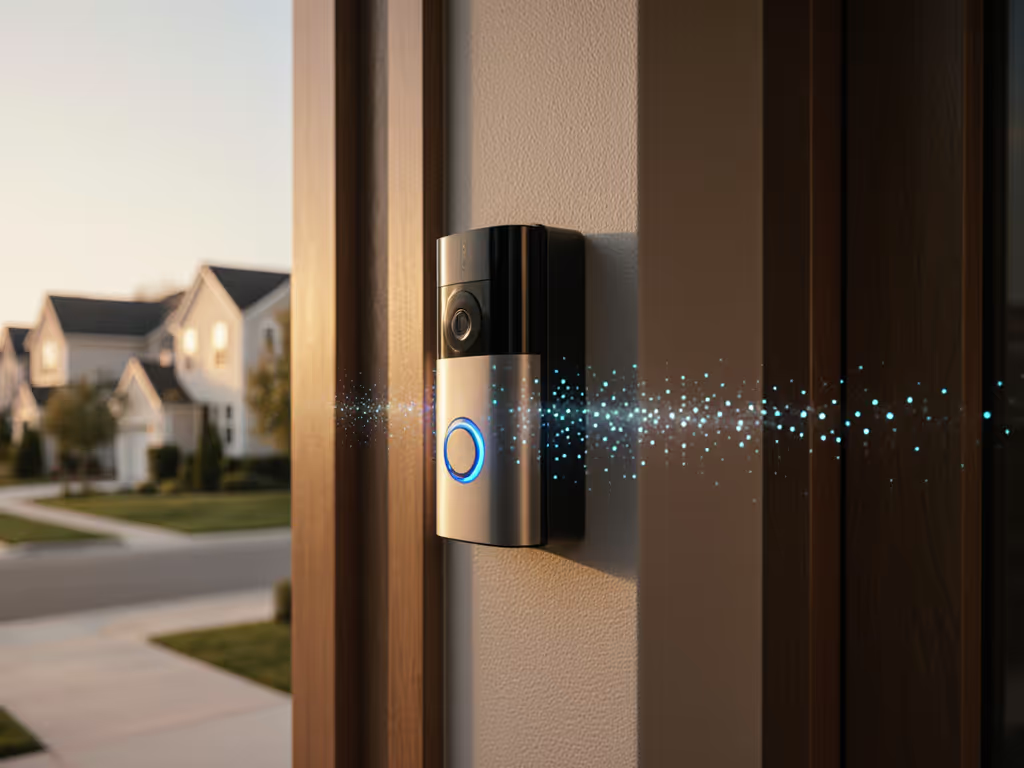
These systems use edge computing processors embedded within the device to run specialized machine learning models that distinguish between:
- Human voices versus ambient noise
- Glass breakage versus accidental thuds
- Package handling versus general movement
- Voice commands versus background conversation
This precision significantly reduces false alerts while maintaining high sensitivity to genuine security events. Systems that process audio locally (rather than in the cloud) also maintain functionality during internet outages, a critical consideration for reliable home security. For a deeper dive into on-device processing benefits, see our guide to edge computing doorbells.
Privacy is a feature, not a line in marketing.
What Specific Sound Events Can Modern Doorbells Detect?
Advanced AI sound recognition systems can identify multiple distinct auditory events with increasing accuracy. The most sophisticated implementations include:
- Glass break detection: Identifies the specific frequency patterns of shattering glass, often with 95%+ accuracy in controlled environments
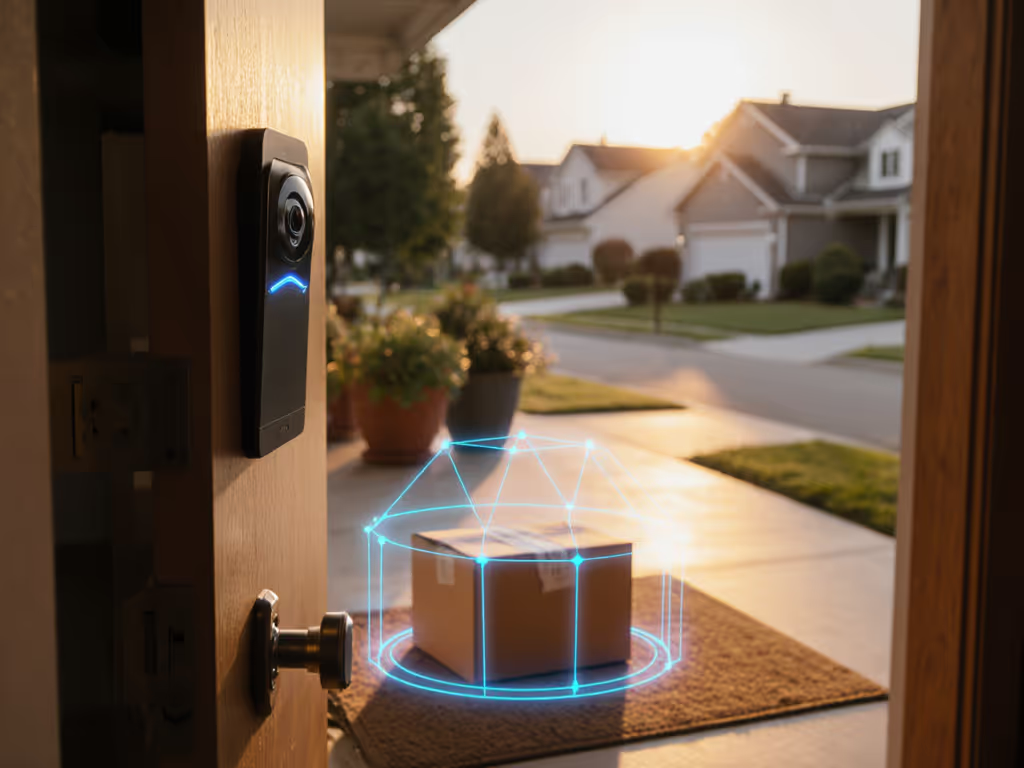
- Package drop confirmation: Recognizes the distinct sound of packages being placed at your door
- Door knock identification: Differentiates purposeful knocks from incidental contact
- Voice command recognition: Processes specific trigger phrases without constant cloud connectivity
- Intrusion detection: Alerts to unusual movement sounds near entry points
Unlike basic motion detection, these audio event triggers create meaningful alerts that correlate directly with security-relevant activities. For example, when my neighbor experienced package theft, I could provide only the relevant minute of footage because my system's local audio analytics precisely timestamped the delivery event without requiring continuous cloud recording.
How Does On-Device Audio Processing Impact Privacy and Reliability?
Many manufacturers advertise "AI capabilities" while actually sending all audio data to the cloud for processing, a significant privacy concern. True threat-model oriented security requires understanding where your audio data is processed and stored.
When local-first is feasible, audio analytics processors maintain privacy by:
- Analyzing sound patterns on-device rather than streaming continuous audio to servers
- Triggering recording only when specific events occur (reducing total stored footage)
- Eliminating the risk of cloud-based audio data breaches
- Maintaining functionality during internet outages
Cloud-dependent systems often require subscriptions for basic functionality, creating what I call "subscription creep", where manufacturers disable essential features without monthly payments. Systems with local processing capabilities provide more transparent, predictable costs with fewer privacy trade-offs.
When reviewing product documentation, look for explicit statements about where audio processing occurs. Policy-quoting manufacturers will clearly specify whether "AI analytics" happen on-device or in the cloud, a critical distinction for privacy-conscious consumers. For hands-on steps to harden your setup, review our doorbell privacy settings guide.
What Are the Privacy Implications of Audio Analytics Systems?
Audio collection introduces unique privacy considerations beyond video surveillance. Many jurisdictions have specific laws governing audio recording that differ from video regulations. A comprehensive threat model for AI sound recognition doorbell systems should address:
- Legal compliance with local recording laws (some states require two-party consent for audio recording)
- Data retention policies for audio files versus video clips
- Whether continuous audio is recorded or only event-triggered snippets
- Third-party sharing policies, particularly with law enforcement
- Possibility of acoustic side-channel attacks that could extract unintended information
Precise definitions matter here: "always listening" systems that process audio locally without recording create different privacy risks than those constantly streaming to the cloud. Local-first, when feasible, architectures minimize exposure while maintaining functionality.
I've reviewed multiple manufacturers' privacy policies and found that systems storing audio events on local microSD cards, with no default cloud synchronization, provide the strongest privacy posture. These systems allow you to maintain complete control over your data, export only necessary clips when required, and keep audit logs showing exactly what left your network.
How Do I Evaluate the Voice Command Accuracy of These Systems?
Voice command accuracy in smart doorbells varies significantly based on several factors:
- Distance from the device (most effective within 10-15 feet)
- Background noise levels (traffic, wind, rain)
- Accent recognition capabilities
- Processing location (on-device vs. cloud)
Independent testing shows that systems using local processing typically offer faster response times (under 1 second) compared to cloud-dependent alternatives (2-5 seconds), but may have slightly lower accuracy with diverse accents. If accent support matters in your household, compare our picks for multilingual voice detection doorbells. The trade-off between privacy (local processing) and voice recognition versatility (cloud processing) represents a meaningful design choice for manufacturers.
When testing voice command systems, I recommend:
- Evaluating performance in real-world conditions (wind, rain, traffic)
- Testing with multiple household members' voices
- Checking if customization of trigger phrases is possible
- Verifying whether voice data is stored or processed locally
What Should I Look for When Implementing Audio Analytics Security?
Diagram-friendly security planning requires evaluating several critical factors:
- Processing architecture: Does audio analysis happen on-device or in the cloud?
- Privacy controls: Can you disable specific audio detection features independently?
- Data governance: Where are audio clips stored, and for how long?
- Ecosystem integration: Does it work with open protocols like Home Assistant rather than proprietary ecosystems?
- Transparency: Does the manufacturer publish detailed technical documentation about their algorithms?
Always prioritize systems that offer local storage options and clear data retention policies. For specifics on automatic deletion schedules and evidence retention, read our doorbell data retention guide. Avoid devices that require subscriptions for basic audio analytics functionality. These create long-term costs and vendor lock-in that contradicts privacy-preserving principles.
The most secure implementations treat privacy as the default configuration rather than an optional add-on. Systems that provide RTSP streaming options, local storage capabilities, and transparent data governance practices align with a threat-model oriented approach to home security.
As audio analytics technology continues to evolve, consumers should demand architecture that respects their right to privacy while providing meaningful security benefits. The next generation of smart security will be judged not by how much data it collects, but by how intelligently it uses minimal data to provide maximum protection.
Further Exploration
For those interested in deeper technical analysis of audio event detection algorithms, I recommend reviewing the IEEE papers on edge-based acoustic classification systems. Privacy-conscious consumers should examine the Electronic Frontier Foundation's guide to smart home security standards, particularly their section on audio data handling. Additionally, Home Assistant's open-source community provides documentation for integrating local-first audio analytics solutions without vendor lock-in.
Related Articles