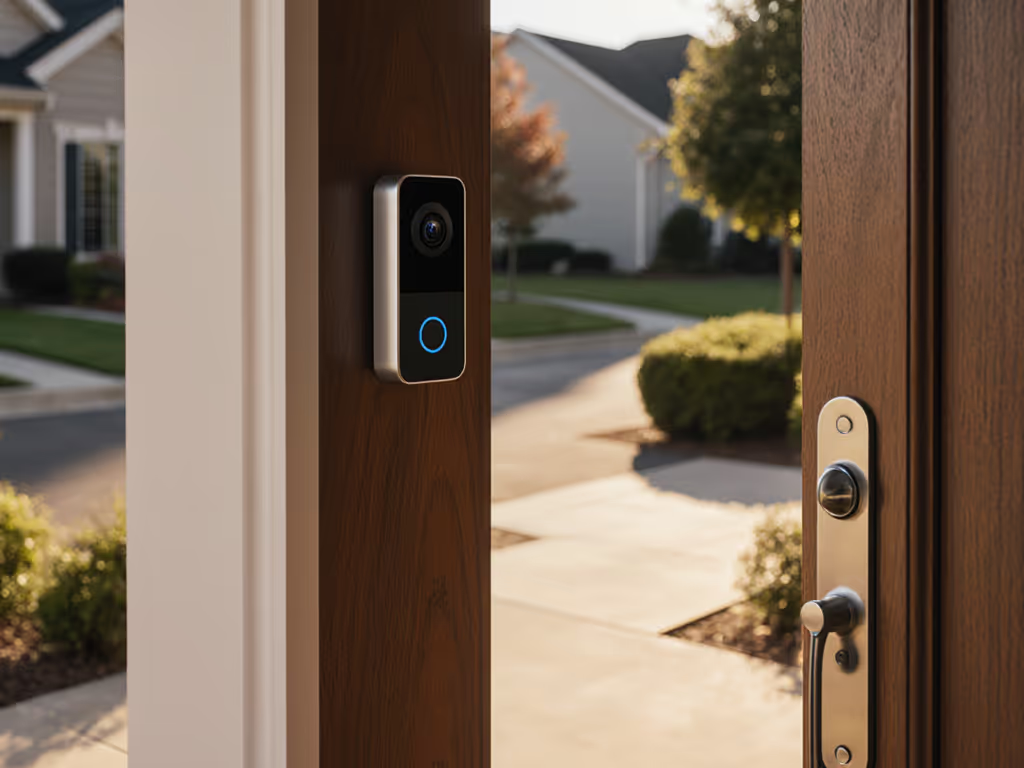
Privacy-First Doorbell Automation: Home Triggers Beyond Security
By Mateo Okafor • 3rd Jan
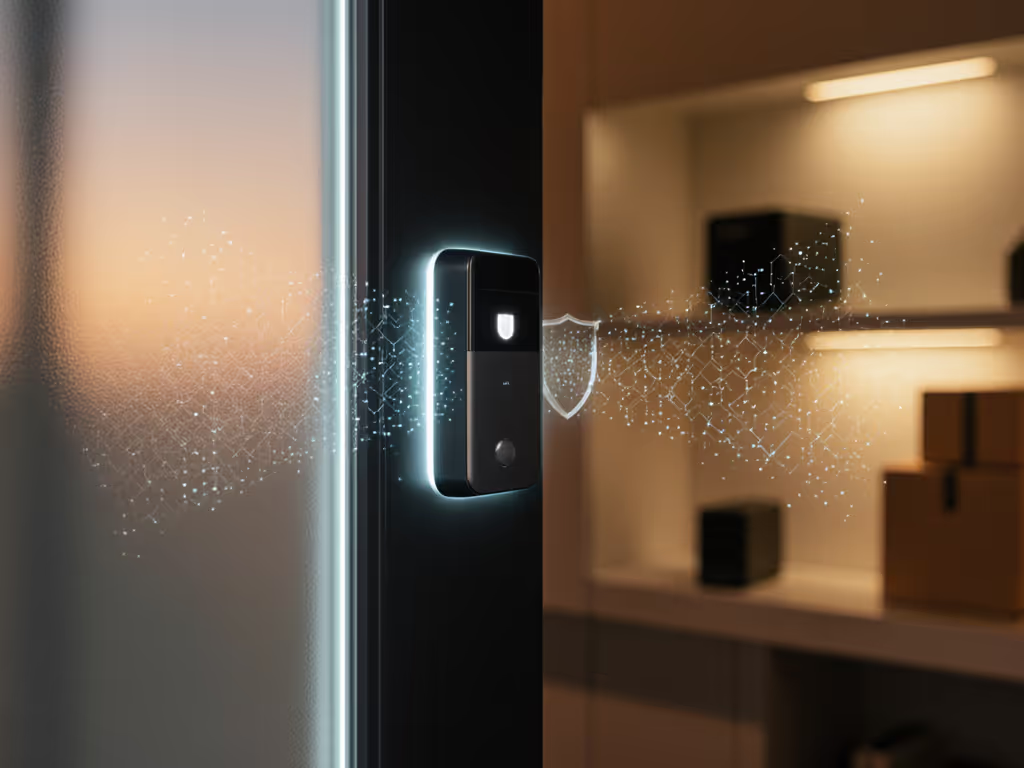
When most homeowners consider home automation doorbell integration, they immediately envision security applications. Yet a growing segment of privacy-conscious users seeks something different: meaningful automation that respects data sovereignty while enhancing daily living. This article explores smart home workflow triggers that prioritize user control over surveillance, demonstrating how to leverage doorbell sensors for practical home functions without sacrificing privacy principles. By designing systems where privacy is the default, we move beyond basic security applications toward genuinely useful home intelligence. If you're new to configuring protections, start with our doorbell privacy settings guide.
What distinguishes privacy-centered doorbell automation from conventional security-focused approaches?
Conventional doorbell systems treat every visitor as a potential threat vector, prioritizing cloud storage, law enforcement partnerships, and persistent data collection. This threat model assumes your porch is a crime scene waiting to happen. Privacy-centered automation, however, starts with a different premise: your home deserves functionality that respects resident autonomy and data sovereignty.
Privacy is a feature, not a line in marketing.
This approach requires precise definitions of what "automation" means in context. For a deeper look at how on-device processing enables these principles, see our overview of edge computing doorbells. True privacy-preserving smart home automation:
- Processes triggers locally whenever possible
- Stores sensitive data on-premises with end-to-end encryption
- Creates granular permission structures for shared spaces
- Avoids default third-party data sharing
- Provides clear audit trails for data exports
When a neighbor recently asked me to review footage after a package theft, I could share precisely one minute of encrypted local video without granting platform access (preserving my audit logs while helping our community). This exemplifies the model we should adopt: selective data sharing as a controlled function rather than default surveillance.
How can I create useful home automation triggers without compromising privacy?
Most doorbell manufacturers obscure data flows behind proprietary ecosystems. To establish privacy-respecting automation, begin with a threat model oriented toward your specific household needs:
Step 1: Map your data pathways
Before configuring any automation, identify:
- Where sensor data originates (doorbell button, motion sensor)
- Where processing occurs (local device vs. cloud)
- Where data gets stored (local storage vs. cloud)
- Who gets access (family members, service providers, third parties)
Step 2: Configure triggers with minimal data exposure
For instance, doorbell-activated lighting doesn't require video storage, only a signal that the doorbell was pressed. Systems supporting local RTSP streams or Home Assistant integration can trigger lighting based on binary sensor data without uploading footage. For practical ideas you can copy, explore our tested automation scenarios.
Step 3: Implement zero-knowledge workflows
Consider visitor-triggered climate control scenarios. When someone approaches your door, you might want to adjust indoor temperature for their arrival. This requires only a "visitor present" signal, not persistent video recording. Open-source home automation platforms can process this trigger locally, then discard the data after the brief activation window.
Audit your data flows to ensure each trigger transmits only the minimum necessary information for its intended function. A doorbell press needn't trigger video capture by default (it should trigger whatever service you've explicitly configured, with data retention limited to what's functionally necessary).
What practical privacy-respecting automation scenarios provide genuine utility?
Beyond basic security functions, thoughtful doorbell integrations can enhance daily living while respecting privacy boundaries. The most valuable implementations share common characteristics:
- They require no continuous cloud connectivity
- They store data only as long as operationally necessary
- They operate with transparent permission structures
- They provide clear on-device indicators of activity
Contextual home theater integration
When your doorbell detects a visitor while your home theater is active, it could pause playback and temporarily lower volume, without recording the interaction. This requires only a signal that the doorbell received input, not persistent video capture. Local systems like those using MQTT messaging can implement this with zero cloud dependency.
Delivery-focused package workflows
Rather than storing all footage, configure systems that:
- Capture only when motion enters designated package zones
- Retain footage for precisely the duration needed to confirm delivery
- Encrypt and store locally until verified
- Automatically purge after verification
This approach addresses "porch piracy" concerns without creating perpetual surveillance archives, a policy-aligned approach that matches reasonable data retention practices. To understand the tech behind these detections and their limits, see our explainer on AI package detection.
Multi-occupant coordination
For households with roommates or family members, privacy-preserving systems should:
- Allow separate notification channels for each resident
- Provide granular access to specific event types
- Maintain separate audit logs for data exports
- Support local sharing of specific clips without cloud routing
This diagram-friendly approach recognizes that "home security" encompasses protecting resident privacy from within the household as much as from external threats.
How do I audit data flows in my doorbell automation setup?
Without rigorous auditing, privacy claims remain theoretical. Every privacy-conscious homeowner should periodically verify:
Data transmission verification
- Use network monitoring tools to confirm what data leaves your premises
- Check whether metadata (timestamps, trigger types) gets shared separately from video
- Verify encryption in transit and at rest
Retention policy compliance
Review your system's actual storage patterns against stated policies:
- Does video automatically purge after the promised period?
- Are temporary files left behind during processing?
- Can you verify deletion through audit logs? If you're unsure how brands handle deletion windows, our guide to data retention policies breaks it down.
Third-party access verification
Confirm whether your automation triggers create unintended data pathways:
- Does your "doorbell-activated lighting" trigger share visitor data with your lighting provider?
- When implementing home theater integration, does your media server receive unnecessary biometric data?
Regular audits protect against "subscription creep" where functionality becomes dependent on additional data sharing layers. This precise definition of system boundaries ensures your doorbell remains a helpful tool rather than a surveillance vector.
What technical considerations matter most for privacy-first automation?
When selecting or configuring doorbell automation systems, prioritize these technical characteristics:
- Local processing capability for basic triggers (doorbell press, motion)
- Support for open protocols like RTSP, ONVIF, or Home Assistant integration
- Transparent data retention policies with user-controlled purge options
- Physical privacy indicators (LEDs showing recording status)
- No mandatory cloud components for basic functionality
Systems requiring cloud processing for simple automation triggers inherently compromise privacy architecture. Conversely, devices supporting local webhook triggers or MQTT messaging enable complex automation workflows while keeping sensitive data within your network perimeter.
Conclusion: Automation that respects your privacy boundaries
Privacy-first doorbell automation creates meaningful convenience without sacrificing data sovereignty. By moving beyond the surveillance paradigm, we can implement genuinely useful home functions (from doorbell-activated lighting to visitor-triggered climate control) that respect resident autonomy.
When evaluating new automation possibilities, ask whether each feature requires persistent data collection or if it can function with momentary, purpose-limited processing. Would this system still provide value without cloud connectivity? Does it treat privacy as a foundational requirement rather than an afterthought?
For those ready to implement these principles, explore open-source home automation frameworks that prioritize local processing and transparent data flows. Resources from the Home Assistant community and open protocol advocates provide diagram-friendly implementation guides showing how to build privacy-respecting triggers without vendor lock-in. The goal isn't merely smarter automation, it is automation that respects the sanctity of home as a private space. Audit your data flows regularly, demand better defaults from manufacturers, and remember that privacy should be the foundation of every home automation decision.
Related Articles